
The Step-by-Step Process of Fire Escape Construction
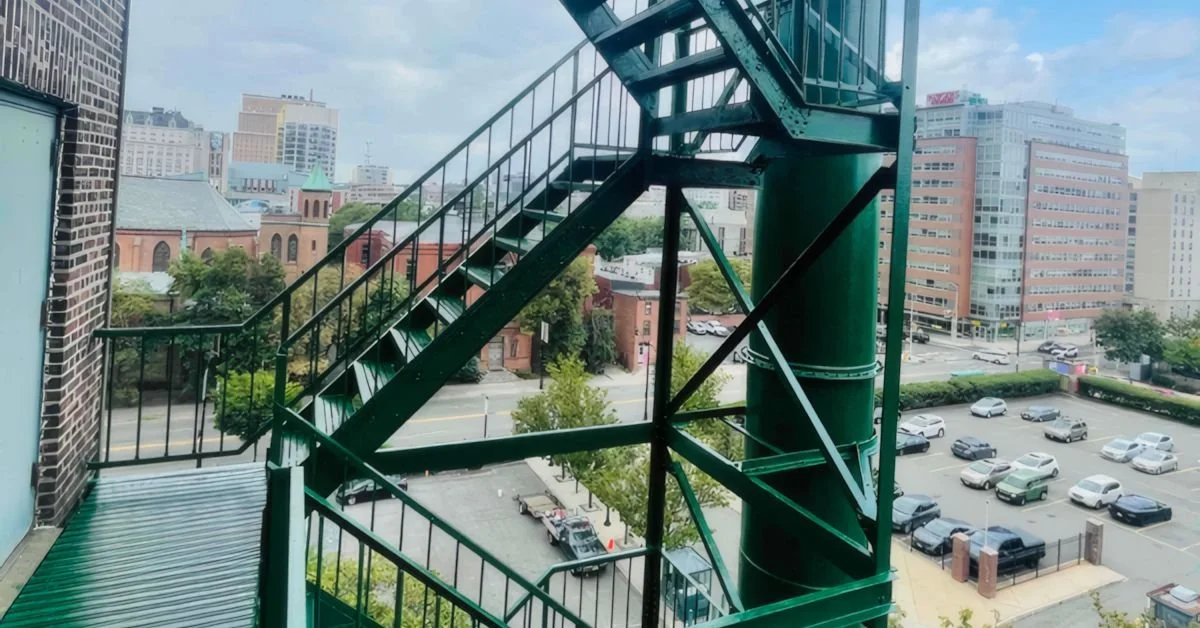
Receiving a violation notice from a local fire official often triggers immediate stress for building owners and property managers. You are concerned about your tenants' safety. You worry about potential liability. You are concerned about the cost and logistics of bringing your property into code compliance. These concerns are valid, but they also have a clear solution. A properly constructed fire escape system resolves these issues, removes the violation, and provides a reliable means of egress for decades.
Many property owners misunderstand how these systems come together. They assume a contractor bolts some metal stairs to the side of a building. The reality involves far more engineering, precision, and expertise.
Understanding the step-by-step process of fire escape construction helps you make better decisions for your property and clarifies why professional intervention is critical.
Phase 1: Engineering and Design
Every successful construction project begins with detailed planning. Before steel is cut, a licensed engineer assesses the building's requirements, which determines project success. Our engineering team inspects the site to evaluate the wall's structural integrity and egress points, such as windows and doors, ensuring they align with the staircase path.
This phase also considers 'pre-existing non-conforming' structures, common in older East Coast buildings that don't meet modern codes. Fire escapes on such buildings often have different regulations. We design systems that preserve the historic character while complying with the International Fire Code (IFC) and avoiding impractical architectural changes.
Once the design is approved, we create detailed shop drawings for fabrication and permit approval, and an engineer stamps them. These drawings are essential for legal construction and permit acquisition. We handle the bureaucratic process so you can focus on managing your building.
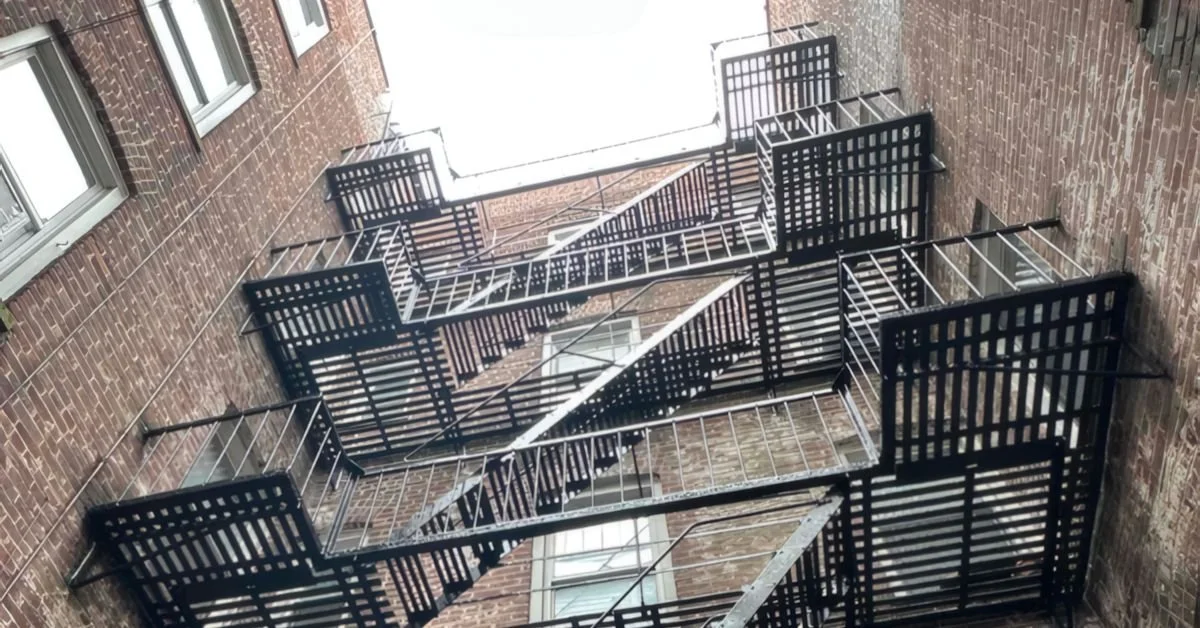
Phase 2: Material Selection and Fabrication
Quality materials define the lifespan of a fire escape. We exclusively use steel for our construction projects. Wood has no place on a fire escape; it rots, burns, and creates safety hazards. Stainless steel often proves unnecessary and cost-prohibitive for these applications. Standard, heavy-duty steel provides the strength required to support residents during an emergency.
Fabrication takes place in our dedicated facility. By building the components off-site, we control the environment and the quality of every weld. Our workforce comprises AWS-certified welders who understand the nuances of metal fusion for structural applications. We prioritize welding over bolting whenever possible.
Bolts introduce points of weakness. Over time, vibration loosens nuts, and moisture creeps into the threads, causing rust to expand and snap the bolt. A proper weld fuses the metal into a single, continuous unit. This method creates a bond stronger than the original material and eliminates the maintenance nightmare associated with rusted fasteners.
Phase 3: Structural Reinforcement and Connections
The connection between the fire escape and the building represents the system's most vulnerable point. If water enters the building envelope at these connection points, it destroys the masonry. Water expands when it freezes, cracking bricks and crumbling mortar. Eventually, the anchor points fail, and the fire escape pulls away from the wall.
To prevent this, we pay obsessive attention to sealing these connections. We apply high-grade silicone or applicable sealant to every structural penetration. This sealant creates a flexible, waterproof barrier that moves with the building's natural thermal expansion and contraction. We reinforce connections to the building frame to distribute the load evenly.
A well-engineered connection point transfers the weight of the steel and the people on it safely into the building's structural core rather than hanging heavily on the facade.
Phase 4: Professional Installation
Once fabrication wraps up, our team transports the components to your site. Installation requires a coordinated effort to lift heavy steel sections and secure them safely at height. Because we use our own trained technicians rather than subcontractors, the on-site crew understands exactly how the engineer intended the system to fit together. They work efficiently to minimize disruption to your tenants.
During installation, we verify every alignment. The ladders must drop smoothly. The treads must sit level. The railings must offer rigid support. We weld components on-site to complete the assembly, delivering the same shop-quality structural integrity in the field. This "weld, weld, weld" philosophy guarantees that the fire escape functions as a cohesive unit rather than a collection of parts rattled loose by the wind.
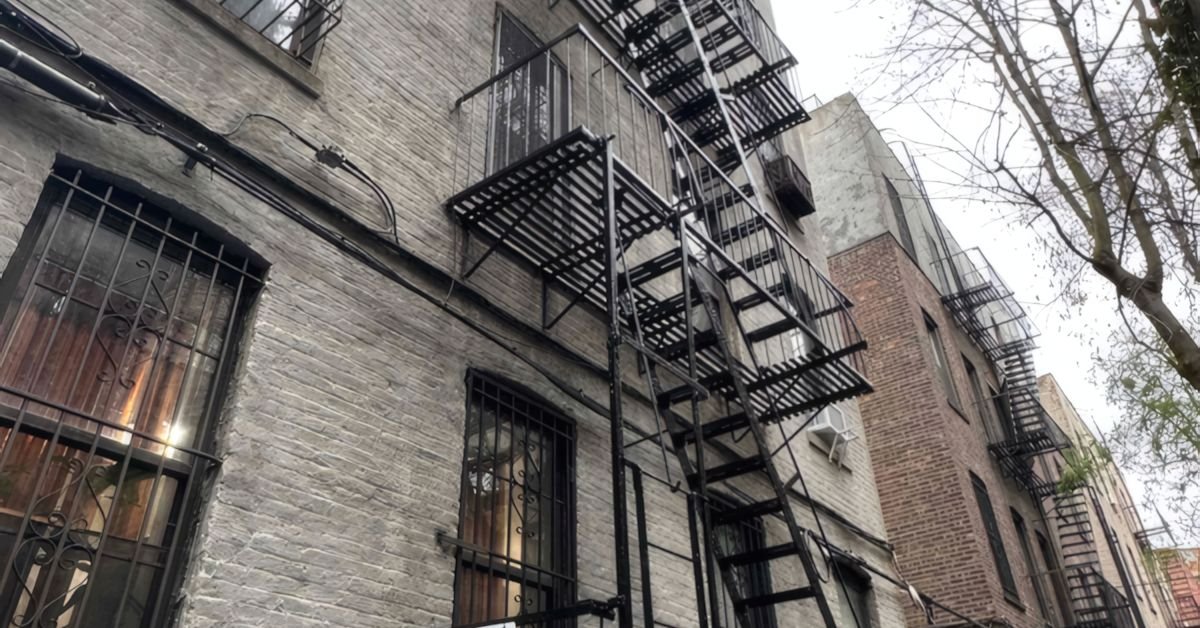
Phase 5: Surface Preparation and Painting
Steel requires protection from the elements. Without a proper coating, oxygen and moisture combine to attack the metal, leading to rust and corrosion. The finishing process determines how long your investment lasts. We reject shortcuts like power washing. High-pressure water drives moisture into crevices and joints, trapping it under the new paint. This causes the steel to rust from the inside out.
We use mechanical methods to prepare the surface, scraping the steel for a clean substrate. Then, we spot prime and apply a single coat of industrial-grade paint, such as Rust-Oleum, which bonds to the metal and forms a durable barrier against environmental elements. We avoid clear coats or multiple layers that peel or flake early. A solid, professional coat allows easy inspection and maintenance.
Phase 6: Final Certification and Warranty
Construction concludes only when the system has proven safe. A licensed professional engineer must inspect the finished product to issue a certification. This document satisfies the violation that likely started this process. It confirms to the local fire marshal and building inspector that the egress system complies with all applicable safety codes.
Under the IFC, this certification remains valid for five years. Every five years, a professional must inspect the system again to verify it remains safe. To track this, we place a notification plate on the fire escape that shows the paint job and inspection dates.
We stand behind our craftsmanship with a 25-year limited warranty on workmanship and materials. This warranty assumes the building owner maintains the mandatory five-year painting and certification schedule. Neglecting maintenance voids the warranty, as even the strongest steel will eventually rust if left unpainted.
Securing Your Building's Future
A fire escape serves as a vital lifeline. When you construct a new system, you invest in the long-term safety of your property and the people who inhabit it. You eliminate the risk of violations and the liability associated with unsafe equipment. By understanding the step-by-step process of fire escape construction, you see why expertise matters.
Don't settle for quick fixes or inexperienced contractors who rely on bolts and subcontractors. Choose a partner who engineers, fabricates, and installs using in-house experts. Whether you need a complete rebuild or a simple certification, Maximum Fire Escapes delivers results backed by decades of experience. Trust us to handle your fire escape construction needs with the professionalism your property demands.