
8 Construction Mistakes That Compromise Fire Escape Safety
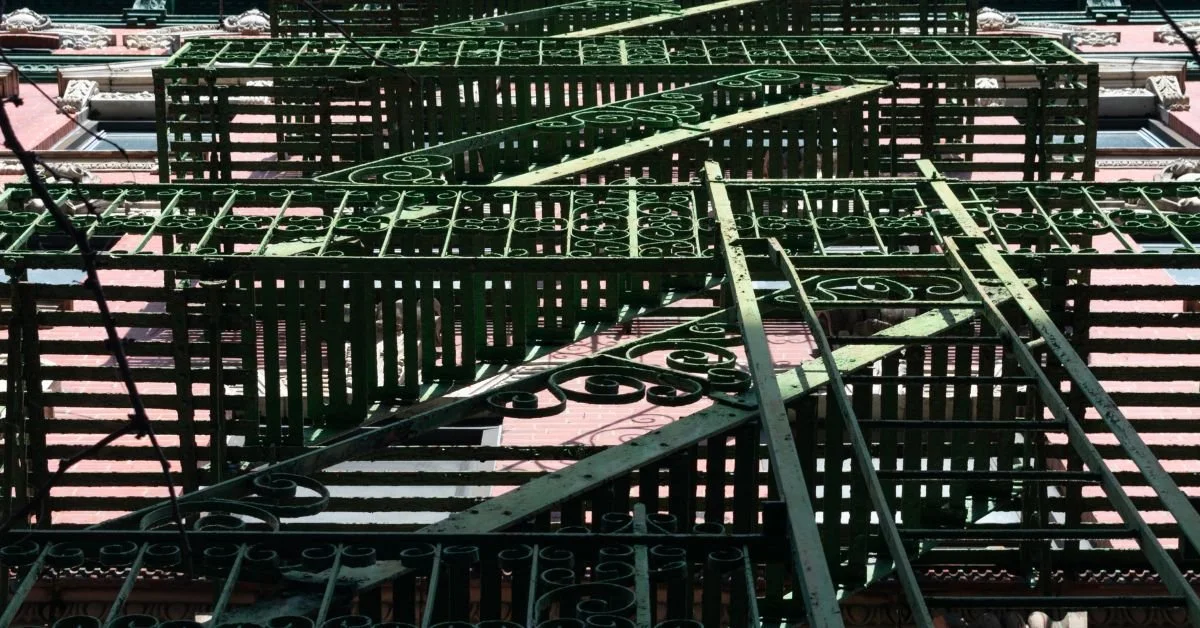
Emergency exits demand absolute reliability. When smoke fills a hallway or flames block a main stairwell, tenants depend on external structures to reach the ground safely. These fire escapes are crucial lifelines, designed to function under the most unpredictable and urgent circumstances. Unfortunately, errors during fabrication, assembly, or maintenance can weaken these structures well before an emergency occurs. Without proper attention to detail, fire escapes may fail when people need them most, leading to devastating consequences.
Property managers and building owners must prioritize structural integrity by actively identifying construction errors that jeopardize fire-escape safety. From material selection to installation and ongoing maintenance, avoiding common pitfalls is key to creating a safe and durable egress route. Below, we’ll explore the most frequent mistakes and how to prevent them.
Choosing Inferior Materials
The materials used in fire escape construction play a critical role in the structure's long-term performance. Steel ‘quality’ in particular determines the longevity and reliability of the escape system. Using untreated or low-grade metals invites corrosion, especially in humid climates or coastal areas where airborne salt accelerates rust formation. Over time, rust eats away at connections, weakens steps, and turns a once-solid pathway into a dangerous hazard.
Galvanized steel is a far superior choice for fire escapes due to its resistance to moisture and the elements. Builders who skip weather-proofing measures often end up facing costly repairs down the road. Even high-quality paint cannot permanently protect inferior metal. Once rust penetrates the surface, the structural integrity degrades rapidly, leaving the escape unsafe for use. Investing in durable, treated materials upfront ensures that the fire escape remains reliable for years to come.
Failing to Calculate Load Capacity Correctly
Load capacity is a critical consideration in fire escape design. Each square foot of a platform must support a specified load to withstand the stresses of emergency evacuation. Engineers calculate live loads to account for rapid evacuations during a panic, but miscalculations can lead to disaster.
If the structure isn’t built to proper specifications, supports can buckle under pressure, and brackets may pull away from the wall. This risk is especially significant when multiple people use the escape simultaneously, compounded by the steel's weight. In many cases, firefighters in full gear will also be climbing the steps while residents descend. A properly constructed fire escape should withstand these combined forces without any risk of failure. Accurate load calculations during the design phase are non-negotiable to ensure the structure’s reliability.
Improper Anchoring to the Building
One of the most frequent failure points in fire escapes is the connection between the metal structure and the building facade. If this anchor point is weak, the entire escape becomes unstable. Common mistakes include drilling into crumbling mortar rather than solid brick and using bolts that are too short. Over time, the weight of the escape pulls these inadequate anchors loose, creating a serious safety hazard.
Through-bolting, which involves passing a bolt entirely through the wall and securing it with an interior plate, provides the strongest and most reliable hold. Installers who rely on shallow expansion bolts risk the entire apparatus detaching from the building during an emergency. Regular inspections should focus on these critical connection points to ensure they remain secure and free of rust.
Neglecting Water Drainage
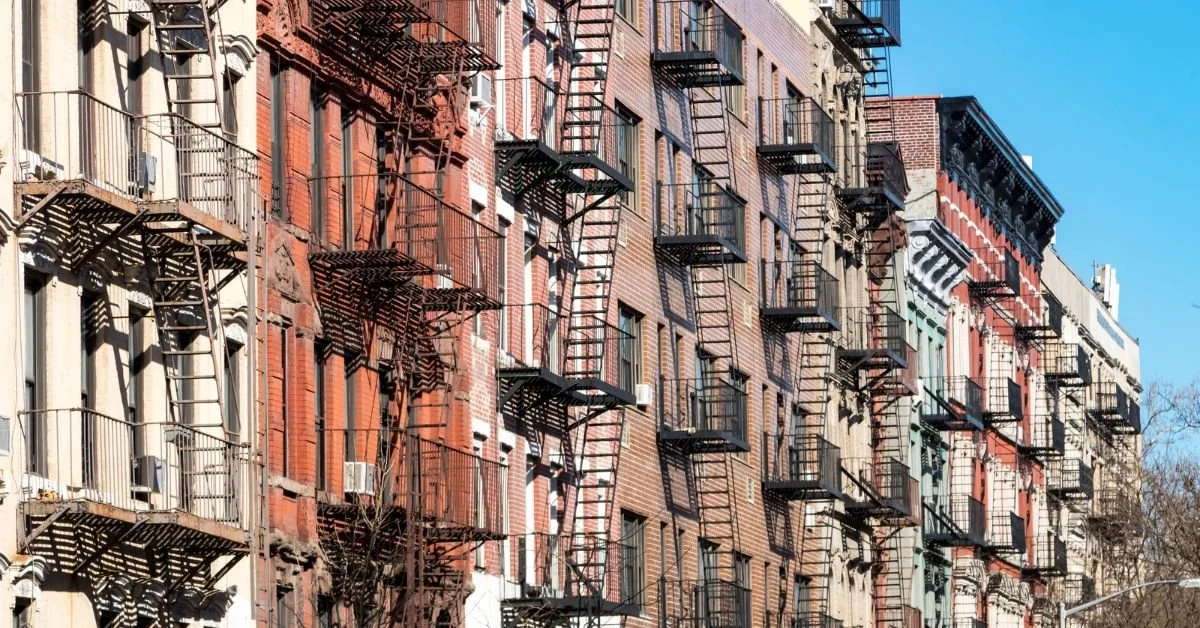
Water is one of the most destructive forces for metal structures. Without proper drainage, rain and snow can collect on fire escape platforms and steps, accelerating rust and creating safety hazards like slippery surfaces or ice in freezing temperatures. Solid checker-plate flooring without drainage holes traps water, turning platforms into a breeding ground for corrosion.
Designs that incorporate grating or perforated steps allow water to pass through, keeping surfaces clear for safe use. Additionally, drainage channels can prevent moisture from pooling in corners or at joint connections, areas that are especially prone to rust. Proper water management not only protects the structural integrity of the fire escape but also ensures safe footing during an emergency.
Overlooking Stair and Railing Dimensions
Building codes dictate strict measurements for fire escape components, including step height, tread depth, and railing height. These dimensions are essential to ensure safe and efficient evacuation. Steps that are too steep or narrow can cause people to trip and fall, leading to dangerous pile-ups during an emergency. Similarly, railings that are too low fail to prevent falls, putting evacuees at risk.
Contractors must carefully verify every measurement against local municipal codes. Even a variance of an inch can violate safety regulations and create liability issues for property owners. Handrails should also provide a continuous grip surface, allowing evacuees to slide their hands along the rail without interruption. Attention to these details ensures that the fire escape is both functional and compliant.
Poor Welding Practices
Welds are essential to metal structures, holding everything together. Poor practices such as inconsistent bead placement, slag inclusions, or lack of fusion create weak points that can fail under stress. Certified welders must perform these connections to ensure strength and safety.
Visual inspections can detect issues such as cracks or porosity. Field welding requires proper conditions; welding wet, dirty, or unprepared steel results in weak bonds. Controlled shop fabrication generally yields better results than extensive on-site welding. Properly executed welds are crucial for fire escape safety.
Ignoring Foundation Support
For fire escapes that extend to the ground, a solid foundation is essential. Simply resting the metal legs on dirt or asphalt invites trouble, as the ground shifts over time, causing the escape to lean or pull away from the building. Concrete pads provide a stable base, distributing the weight evenly and preventing sinking or misalignment.
To ensure long-term stability, builders must pour these concrete footings below the frost line. This prevents heaving during freeze-thaw cycles, which can compromise the escape’s alignment and safety. A well-supported foundation is a key component of a reliable fire escape system.

Lack of Maintenance Access
Even a well-constructed fire escape can fail if it isn’t maintained correctly. Designs that don’t account for future maintenance create significant long-term issues. Tight corners, hidden joints, and other hard-to-reach areas make it difficult to remove rust or apply protective coatings. Over time, these neglected areas become weak points that can lead to structural failure.
Simple, open designs that allow inspectors to see every connection and painters to coat every surface are far easier to maintain. Planning for the entire lifecycle of the fire escape, not just the initial installation, is crucial to avoiding construction mistakes that compromise fire escape safety.
Secure Professional Assistance
Maintaining a safe egress route requires attention to detail and adherence to strict engineering standards. Property managers and building owners should rely on experienced professionals to handle fabrication and assembly, as well as ongoing inspections and maintenance. Correct fire escape installation prevents these common errors and guarantees a durable, compliant structure.
Maximum Fire Escapes offers expert guidance to ensure your building’s fire escape is reliable, safe, and built to last. Contact our team at Maximum Fire Escapes today for an inspection or quote, and take the first step toward safeguarding your property and its occupants.