
Temporary vs Permanent Fire Escape Repairs: What’s Best?
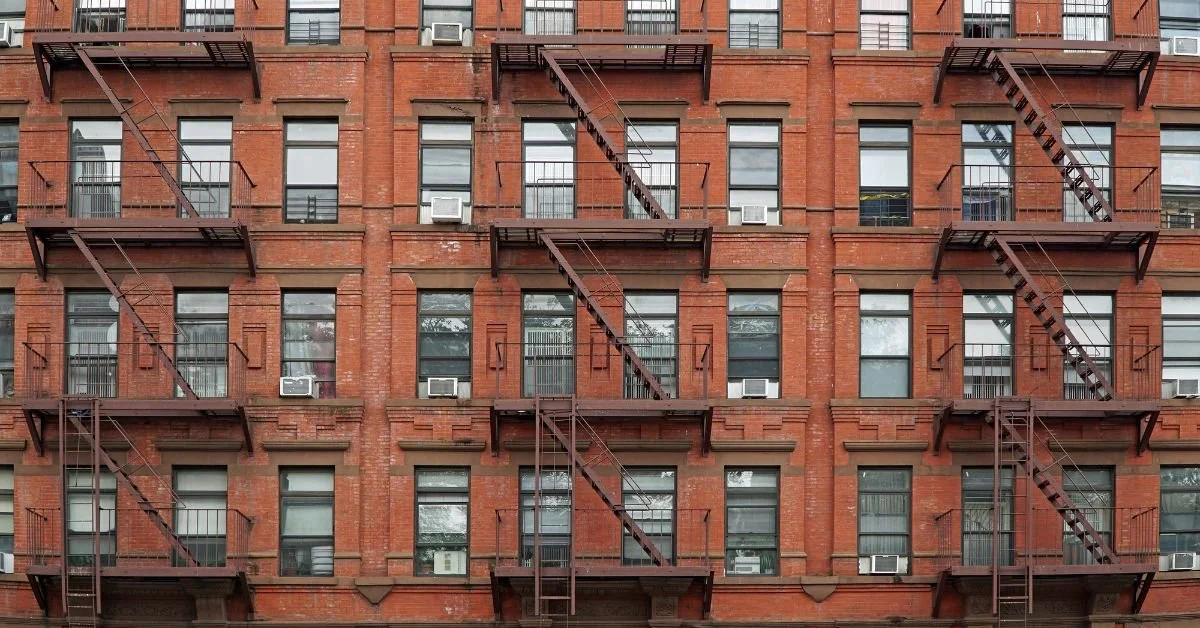
Property managers, building owners, and real estate teams face tight deadlines when violations occur. Inspectors cite violations for corrosion, broken welds, worn connections, or unsafe movement along platforms. Many owners feel pressure to choose a quick patch while juggling tenants and schedules.
That choice shapes budgets and timelines, which raises the question behind temporary or permanent fire escape repairs: what’s best? Each path carries clear consequences, and understanding those differences guides the smartest next step.
Temporary Repairs for Short-Term Compliance
Temporary repairs create breathing room during stressful violation periods. Crews patch surface layers, close holes, reinforce loose areas, and stabilize sections long enough for recertification.
That approach helps property owners and managers meet immediate deadlines and keep buildings open while planning larger structural work. Therefore, temporary repairs appeal to owners who need compliance without major downtime.
However, surface-level work addresses only some issues, such as:
Flaking paint
Surface rust
Minor movement at steps or rails
Temporary bracing at weakened points
Temporary repairs help reduce risk during inspections and short periods, though they rarely address deep corrosion or failing welds. Once the structure has endured years of water exposure, load cycles, and weather impacts, surface-level work quickly loses strength and is unlikely to be recommended. Property owners and managers who go this route should still schedule long-term updates, because short-term patches never reverse long-term deterioration.
Permanent Repairs for Long-Term Stability
Permanent repairs ensure complete structural restoration. Crews eliminate rotten steel, cut away damaged sections, weld new connections, replace weakened stair runs, and rebuild platforms. These actions restore strength at all load points. Unlike cosmetic fixes, which are less durable, permanent repairs offer longer-lasting reliability, reducing safety incidents and lowering long-term costs.
Permanent repairs address the underlying issues effectively. It’s important to note that permanent repairs meet the IFC five-year certification standards without needing frequent patching cycles.
Quick Tip
Request clear photos or videos of the repair work. That documentation helps owners track progress and understand future maintenance needs.
Choosing Based on Violation Severity
Violation severity drives the decision. Light corrosion or loose paint generally allows temporary repairs, although more severe degradation requires permanent intervention. When rust penetrates load-bearing steel or welds break under pressure, the fire escape likely needs complete restoration, not patching.
Age plays a major role as well. Many fire escapes across the country are 80 to 120 years old. Time wears down steel, and, temporary repairs fail to correct structural decay in older metal. Long-term repair strategies help stop repetitive issues that cycle through every five-year inspection.
Fire Escape Restoration and Full Structural Work
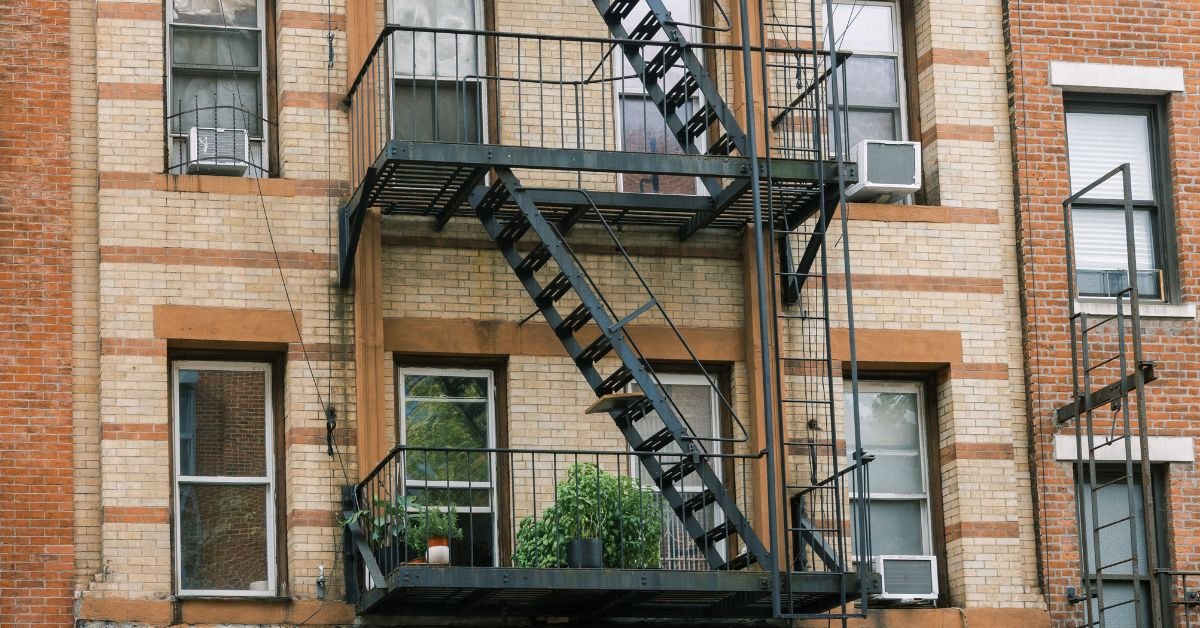
Owners who pursue more extensive repairs turn to fire escape restoration. Restoration teams inspect every connection, weld, platform, and ladder point. Crews remove compromised steel, re-weld structural joints, reinforce load points, and repaint with strong, approved coatings. That whole process resets the fire escape for another long service cycle.
Restoration prevents hidden failures. A fire escape contains dozens of welded joints. When one weak joint cracks, nearby joints carry increased stress. Restoration removes that risk by rebuilding entire sections rather than patching surface layers.
Cost Factors for Temporary vs Permanent Work
Costs vary based on deterioration depth, building height, and project complexity. Temporary repairs cost less upfront, but they incur recurring expenses later. A temporary patch might address an immediate violation, but recurring corrosion requires more visits and more disruption.
Permanent repairs cost more at the start, although the owner pays for the structure once instead of repeatedly. Owners with violations appreciate this clarity. A rebuilt escape performs longer, maintains higher reliability, and reduces follow-up visits. Managers dealing with multiple properties gain smoother schedules when long-term fixes eliminate emergency calls.
Safety Considerations for Both Options
Temporary repairs create stability for the short term. Those steps buy time, although they never resolve deeper structural threats. Permanent repairs address those risks because full welding, reconstruction, and steel replacement restore the fire escape to dependable function.
Fire escape safety affects every tenant and every visitor. Corroded metal can fail under minimal weight. A rebuilt escape gives owners confidence during emergencies, inspections, and day-to-day use. Therefore, permanent repairs remain the stronger long-term strategy for any structure with advanced deterioration.
Temporary repairs fit situations such as:
Surface rust
Minor movement
Tight violation deadlines
Short-term accessibility needs
Permanent repairs fit situations such as:
Deep corrosion
Failing welds
Broken platforms
Sagging ladders
Long-term structural planning

Maintenance After Permanent Work
Permanent repairs still require maintenance, for example, those fire escapes still generally need to be repainted every five years during the IFC inspection cycle. Crews apply a fresh coat of approved paint, weld any new issues, and document the entire fire escape. Regular maintenance extends the life of the initial permanent work, and keeps the structure sound and compliant, which also protects budgets across large portfolios.
Long-term owners, such as real estate companies or property management groups, appreciate predictable costs. A permanent repair creates that path, because maintenance inspections follow a consistent cycle.
Choosing the Best Strategy
Managers often ask whether temporary or permanent repair work is a better fit for their situation. Temporary repair work clears deadlines and prevents violations from snowballing. Permanent repairs rebuild strength and extend lifespan. Both carry value, although long-term planning usually points toward reconstruction.
Property owners with aging structures face increasing deterioration over time. Temporary repair work controls cracks or loose sections for a short time, though deterioration continues to deepen. Permanent repair work resets the entire structure and delivers decades of safety.
When comparing temporary or permanent fire escape repairs, owners and managers gain clarity by reviewing deterioration depth, upcoming inspections, building age, and long-term goals. That comparison highlights the advantages of both paths, though permanent repairs offer stronger protection and lower lifetime costs.
Long-Term Safety Planning
Owners who manage multiple properties benefit from long-term repair planning. Scheduling permanent repairs across an entire portfolio reduces emergency calls, spikes in violations, and tenant disruptions. That planning also helps managers forecast capital spending for future cycles.
Real estate companies often juggle many buildings. Long-term structural health reduces violations and increases compliance across regions. Permanent repair work suits that model because restored escapes perform reliably across many years.
Restoring Safety Through Permanent Repairs
Property managers nationwide, from New York to Texas, rely on our durable repair services for long-lasting results. While temporary repairs address immediate issues, permanent solutions tackle deeper problems and ensure tenant safety for decades. Property owners facing violations need clear guidance, strict timelines, and reliable service. Maximum Fire Escapes manages the entire process using AWS-certified welders and offers nationwide coverage.
Maximum Fire Escapes travel anywhere, provide free inspections, rebuild fire escapes, and ensure long-term compliance and safety. Contact Maximum Fire Escapes today to schedule a free inspection and determine the safest course of action.