
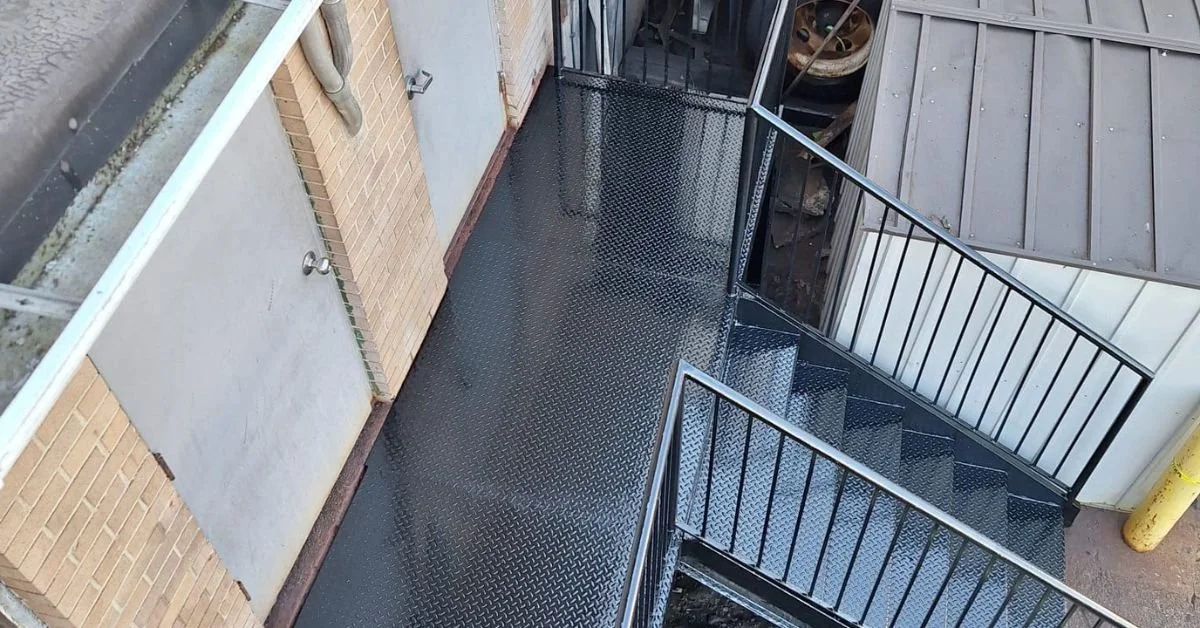
Fire escapes are constantly exposed to harsh weather conditions that compromise their structural integrity and safety. Rain, snow, wind, and temperature fluctuations create ongoing challenges for these emergency exit systems. Weather-related deterioration costs property owners thousands of dollars in repairs when left unchecked.
Implementing proper protective measures, however, extends your fire escape's lifespan while avoiding costly emergency replacements. Understanding how weather affects fire escapes helps property owners and managers take proactive steps to protect their fire escape from weather damage and maintain compliance with safety codes.
Understand Weather's Impact on Fire Escape Materials
Weather creates multiple pathways for the deterioration of fire escape systems. Rain penetrates joints and connections, causing rust to form in hidden areas. Snow accumulation adds weight stress to platforms and railings while creating freeze-thaw cycles that expand metal components. Wind drives moisture into crevices and accelerates corrosion processes.
Metal fire escapes are particularly prone to oxidation when moisture combines with oxygen. This chemical reaction weakens structural components over time. Temperature changes cause expansion and contraction, loosening connections and creating gaps where water can enter.
Rust Formation and Progression
Rust develops through electrochemical processes when iron reacts with oxygen and water. Surface rust appears first as a reddish-brown discoloration. Without treatment, corrosion spreads deeper into metal structures, compromising load-bearing capacity. Coastal properties face additional challenges from salt air, which accelerates corrosion rates. Urban environments can also introduce pollutants that create acidic conditions, further damaging metal surfaces.
Moisture Prevention Strategies
Effective moisture management forms the foundation of weather protection. Proper drainage prevents water accumulation on platforms and landings. Installing adequate gutters diverts water away from fire escape structures.
Sealing joints with appropriate materials blocks water entry points. Silicone applications around connections create waterproof barriers while maintaining structural flexibility. Regular inspection identifies new gaps before moisture penetration occurs.
Drainage System Maintenance
Clear drainage paths allow water to flow away from fire escape components. Blocked drains create standing water that accelerates rust formation. Monthly cleaning removes debris from drainage systems. Sloped surfaces direct water toward designated drainage points. Proper grading also prevents pooling around fire escape foundations and support structures.
Protective Coatings and Paint Applications
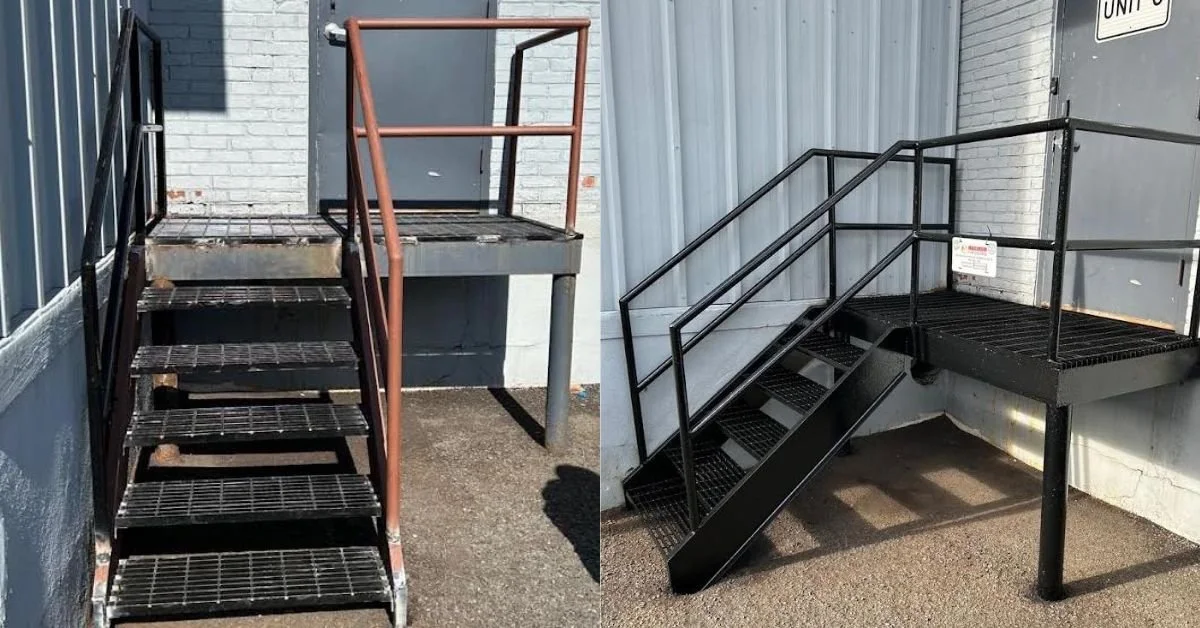
A quality paint system is the primary defense against weather exposure. Multiple layers of coating create a barrier between the metal and the environment. The primer bonds to the metal, while the topcoat resists UV radiation and moisture.
Proper painting requires thorough surface preparation, including wire brushing, to remove existing rust and contaminants. This ensures optimal paint adhesion. Applying paint in suitable weather conditions is also essential for proper curing and film formation.
Paint System Selection
Different paint formulas offer varying levels of protection. Epoxy-based coatings provide superior adhesion and chemical resistance, while certain urethane topcoats resist UV degradation and maintain color stability.
Specialized fire escape paints, such as those from Rust-Oleum, meet safety standards while providing weather protection. These often contain corrosion inhibitors that actively prevent rust from forming under the coating.
Application of Protective Coatings
Applying protective coatings is crucial for extending the life of a fire escape. These corrosion-resistant paints and sealants create a barrier against harsh weather and moisture. We recommend inspecting and reapplying coatings every two to three years, or as needed, to ensure continuous protection. Choose high-quality, UV-resistant products to prevent fading and cracking. Proper surface preparation, including cleaning and rust removal, is vital before applying any coating to ensure maximum adhesion and durability.
Structural Reinforcement Methods
Weather damage weakens fire escape structural elements through various mechanisms. Professional welding repairs replace corroded sections with new metal components. Reinforcement brackets strengthen weakened connections.
Load distribution improvements prevent stress concentration at vulnerable points. Adding support members spreads the load across larger areas, reducing the stress on individual components.
Welded Connection Maintenance
Welded joints create permanent bonds between fire escape components. Weather exposure can cause weld deterioration through corrosion or thermal stress. Regular inspection identifies compromised welds before failure occurs.
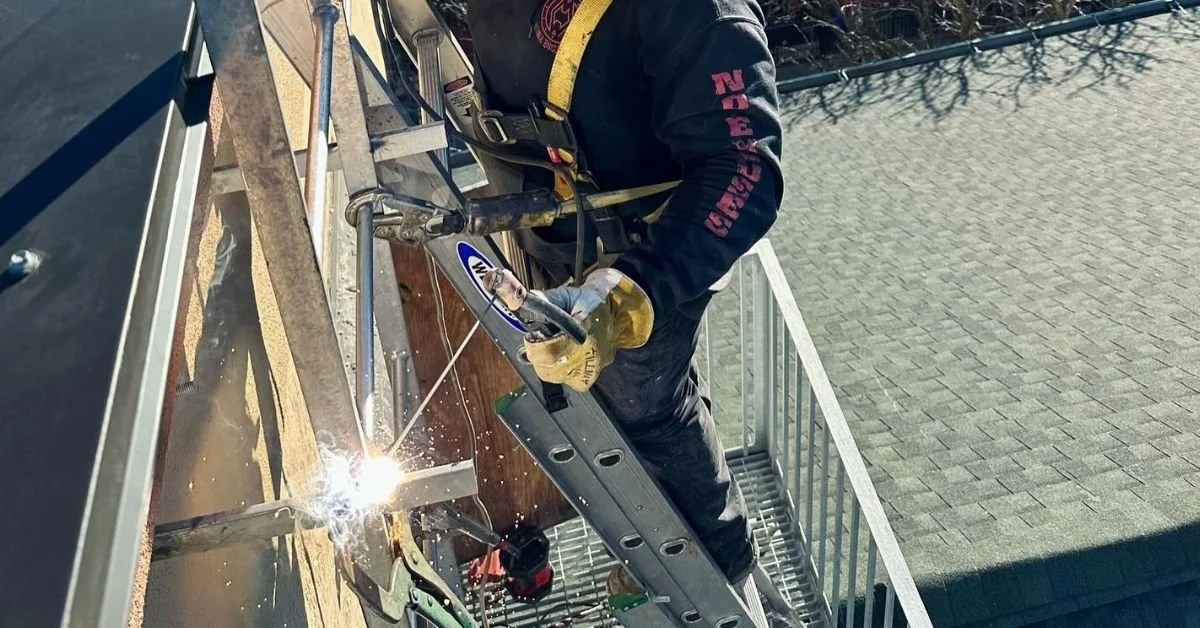
Professional welding repairs restore structural integrity using appropriate materials and techniques. AWS-certified welders follow established procedures for fire escape work, maintaining safety standards while delivering durable maintenance.
Inspection and Maintenance Schedules
Regular inspection programs help identify weather-related damage early, making repairs more affordable. Monthly visual checks can catch obvious problems like loose connections or surface rust. Annual professional inspections assess structural integrity and verify compliance with codes, such as the IFC requirement for certification every five years.
A documentation system records maintenance activities and damage development. Written records aid in insurance claims and regulatory adherence. Photographic documentation offers visual proof of condition changes over time.
Seasonal Maintenance Tasks
A structured seasonal maintenance approach can effectively address weather-related issues.
Spring: Inspections should focus on winter damage assessment and repair planning.
Summer: This season is suitable for maintenance that includes painting and coating applications during favorable weather.
Fall: Preparations should involve drainage cleaning and weatherproofing before winter arrives.
Winter: Monitoring should watch for ice accumulation and snow loading that exceeds design limits. Prompt snow removal prevents excessive weight stress on fire escape structures.
Emergency Weather Response
Severe weather events require immediate assessment and response protocols. High winds can loosen connections or cause structural damage. Ice storms create dangerous conditions while adding significant weight loads.
Post-storm inspections identify damage requiring immediate attention. Temporary stabilization measures maintain safety while permanent repairs are arranged. A professional assessment determines whether fire escapes remain safe for emergency use.
Storm Damage Documentation
Detailed damage documentation supports insurance claims and repair planning. Photographs capture the extent of damage and location for professional review. Written descriptions should include specific component failures and safety concerns.
Professional engineering assessments provide authoritative damage evaluations. Structural engineers determine repair requirements and safety implications following severe weather events.
Safeguard Your Emergency Egress
Specialized fire escape contractors bring expertise and equipment for comprehensive weather protection programs. Professional services include structural assessment, repair planning, and preventive maintenance scheduling. Certified welders perform structural repairs using appropriate materials and techniques. Professional painters apply protective coatings following established procedures for optimal durability and weather resistance.
The goal remains safeguarding these structures against weather-related deterioration while maintaining emergency egress capabilities. A dedicated fire escape company provides comprehensive weather protection services. Experienced technicians deliver professional work that extends fire escape service life while maintaining safety compliance. Contact a professional to schedule an assessment and develop a customized maintenance program to protect your fire escape from weather damage. For a free quote from Maximum Fire Escapes, reach out to our team.