
How Inspectors Evaluate Fire Escape Stairs and Platforms
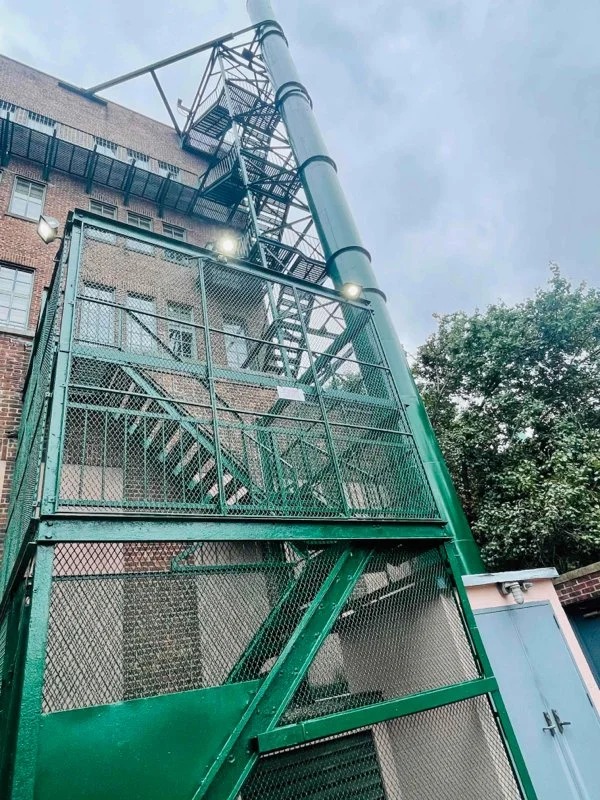
A fire escape can look sturdy from the ground while its stairs and platforms develop problems that aren’t easy to see. Weather exposure and years of use can affect the metal, as well as the connections between different sections.
Knowing how inspectors assess stairs and platforms on fire escapes helps building owners understand what to anticipate during inspections. The following sections outline the main aspects that inspectors examine and the conditions that might require additional inspection or repairs.
Inspectors Start With the Overall Condition
An inspection starts with assessing the overall condition of the fire escape and how its main parts are connected. Special attention is given to stairs and platforms, as these consist of the path occupants would take during an emergency.
The age of a fire escape does not automatically reflect its condition; older structures can still be functional if their framing and connections remain solid. Visual appearance alone can be misleading: paint might hide corrosion, and deterioration can develop around connections that aren't visible from the ground.
A thorough inspection helps distinguish superficial wear from issues that could impact structural integrity. Inspectors use these observations to decide which areas need further evaluation.
Stair Stringers Can Reveal Structural Problems
Stringers support the stair assembly and help carry loads between sections of the fire escape. Inspectors examine these members for corrosion, deformation, and deterioration around their connections.
Surface rust doesn’t always indicate extensive structural damage. However, deeper corrosion or visible metal loss can raise greater concern, especially when it appears around bolted areas or where stairs meet a platform.
The position of each stair section also matters. Movement or changes in alignment can give an inspector a reason to examine the supporting connections more closely.
Inspectors consider the full stair assembly rather than treating each affected area separately. Deterioration in a supporting member may influence nearby components that appear sound during a basic visual check.
What Can Draw an Inspector’s Attention?
Several conditions may warrant closer examination:
Corrosion extending into structural metal
Cracks or separation around bolts or around welds
Movement between stairs and platforms
Bent or deteriorated stair components
Metal loss in exposed areas
One condition doesn’t automatically mean a fire escape requires extensive reconstruction. Inspectors consider where the deterioration appears and how far it has progressed when evaluating its effect on the structure.
Platforms Require More Than a Surface Check
Fire escape platforms connect stair sections and provide areas where occupants can move between levels. Their exposed position can leave the metal vulnerable to corrosion over time.
Inspectors don’t judge a platform by its walking surface alone. The framing underneath can reveal deterioration that a building owner may not notice during routine property checks.
Paint can also make the visible surface look sound while corrosion develops underneath or around adjoining components. Areas where rust has returned may call for closer examination of the underlying metal.
Connections around the platform receive similar attention. Inspectors look at where the framing joins stair sections and other structural components for deterioration that could affect the assembly.
Examining the surrounding framing provides more context than looking at one visible area. It helps show whether deterioration remains isolated or affects connected sections.
Welded Connections Need Careful Evaluation
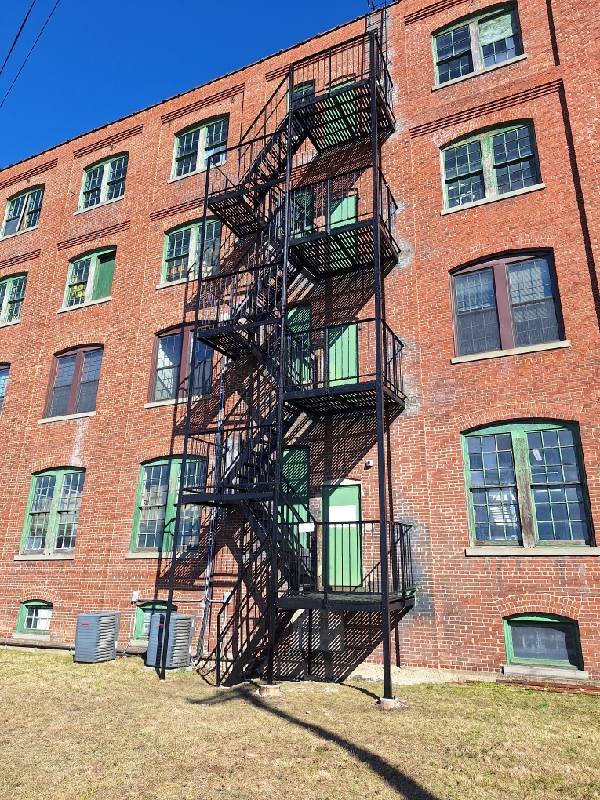
Welds play a crucial role in connecting many parts of a fire escape, including stairs and platforms, ensuring they stay securely attached. Inspectors check for cracks or separations near welded joints and also look for corrosion, which can suggest the need for further assessment of the surrounding metal.
Sometimes, a weld may appear undamaged while corrosion or deterioration develops nearby, so inspectors focus on the area around the weld rather than just the weld itself. If the damage is in a repairable zone, structural welding can strengthen the weakened part. The size and location of the damage guide the necessary repairs.
Railings Are Part of the Structural Review
Railings along stairs and platforms also receive attention during an inspection. Their connections matter because occupants may depend on the railing for support while moving along the fire escape.
Inspectors check where railings connect to stair or platform framing. Movement at these locations can indicate deterioration around the connection.
Corrosion can provide another warning sign. Rust concentrated near a railing connection may extend into metal that isn’t immediately visible.
The surrounding structure provides context for what the inspector sees at the railing. Evaluating both areas can help identify where deterioration originates and whether repairs are needed.
Inspectors Follow Deterioration Beyond One Area
A fire escape functions as a connected structure. Problems affecting one stair or platform can indicate the condition of nearby components.
Corrosion where a stair meets a platform, for example, may continue into the supporting framing. Damage around a welded connection can also prompt an inspector to examine similar areas elsewhere.
For that reason, evaluating fire escape stairs and platforms during an inspection involves looking beyond the first visible problem. Inspectors follow signs of deterioration to determine whether they remain localized or affect connected structural areas.
This broader examination also gives building owners better context for repair recommendations. A repair may involve a nearby component even when that section appears sound from a distance.
Inspection Findings Help Determine What Comes Next
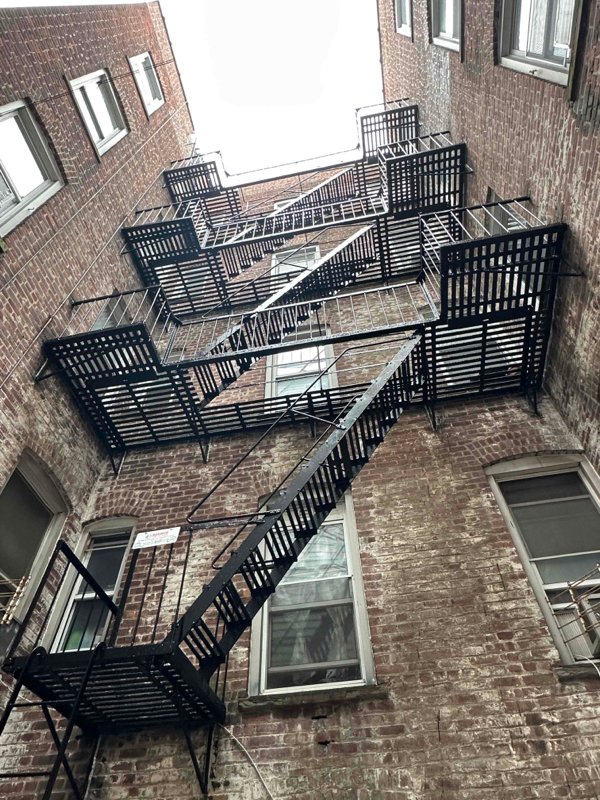
Once the structural components have been examined, the findings provide a clearer picture of the fire escape’s condition. An inspector can document areas of deterioration and identify structural concerns that may require attention.
These findings can also factor into fire escape certification when a property reaches its examination and certification requirements. If the examination identifies structural problems, repairs may be needed before the structure can move through the certification process.
Visible rust alone doesn’t indicate the extent of a repair. Some corrosion may remain near the surface, while other deterioration can affect structural metal or welded connections.
An inspection helps establish that distinction. Building owners can use the findings to understand the condition of the fire escape and address repairs based on the areas that need attention.
Why Close Evaluation Matters
Stairs and platforms experience long-term exposure while serving as connected parts of a larger structure. Deterioration can develop underneath platforms, around bolted connections, or along supporting stair components without creating an obvious problem from the ground.
A professional examination provides a closer view of those areas. It can identify where corrosion remains limited and where deterioration has started affecting structural components.
For building owners and property managers, that information removes much of the guesswork from assessing an aging fire escape. Inspection findings provide a clearer basis for planning repairs and addressing structural concerns before deterioration progresses.
Get a Clearer Picture of Your Fire Escape
Fire escape stairs and platforms can show signs of age without revealing the full condition of the structure. A detailed inspection examines the components themselves, as well as the connections that allow them to work together.
If your property needs an inspection or has an existing violation, contact our team at Maximum Fire Escapes to have the fire escape evaluated and determine what work may require attention.