
How To Add a Fire Escape to a Historic or Landmark Building
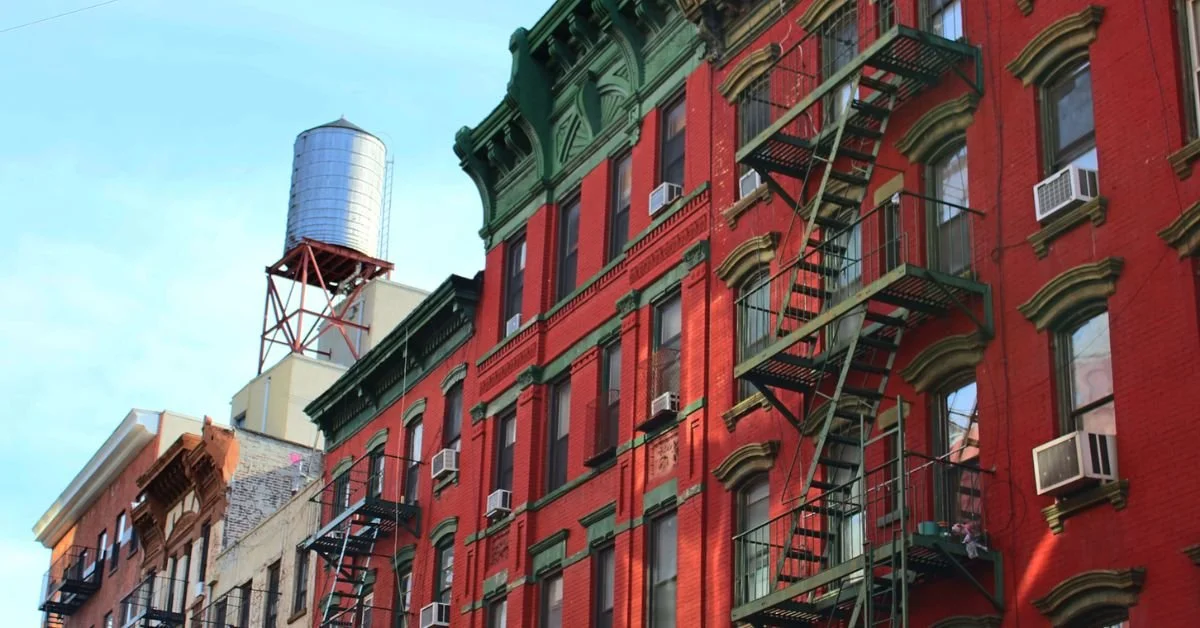
Adding exterior egress to a protected structure requires careful planning and disciplined execution. When you add a fire escape to a historic or landmark building, you must meet life-safety standards without compromising the building's architectural character. Preservation boards expect thoughtful design, and building officials expect structural compliance. A successful project balances both from the start.
Historic properties carry structural and visual constraints that demand expert coordination. You must evaluate the building’s condition, secure approvals, and design a system that integrates with the façade. Each step affects safety, inspection outcomes, and long-term durability.
Confirm Landmark Status and Preservation Requirements
To begin, it’s essential to verify the building’s official designation. A local or national landmark classification changes the approval pathway and documentation standards. Preservation commissions carefully review exterior alterations, including platforms, stairs, and ladder systems.
Next, review the applicable preservation guidelines. Most boards expect:
Minimal visual impact on primary façades
Attachment methods that protect original masonry
Materials that complement the structure
Detailed drawings that show structural integration
After gathering the observations and information, submit all documentation before scheduling fabrication. Doing so early helps avoid delays and minimizes revision cycles during the review process.
Evaluate Structural Capacity Before Design
Historic masonry has its own unique characteristics compared to modern construction. Over time, features such as aging mortar joints, embedded steel, and previous modifications can affect how loads are distributed. That's why it's important to carry out a thorough structural assessment before finalizing your design drawings.
Engineers will thoroughly examine factors such as wall stability, anchor placement, floor framing alignment, and the façade's condition. This helps determine the best bracket placement and the most effective connection strategies. Using proper anchoring keeps the building safe and ensures it performs well over time, meeting inspection standards.
Taking the time for strong structural planning now can also help reduce the chances of needing repairs or corrections in the future.
Understand IFC Certification Requirements
Fire escapes generally must be inspected and certified in accordance with the International Fire Code, which mandates inspections every five years. This requirement applies to all buildings, regardless of age or landmark status. Inspectors assess weld quality, platform stability, anchorage strength, and overall structural integrity.
To ensure ongoing compliance, design choices should facilitate ease of inspection from the start. Careful fabrication and professional installation help simplify future certification processes. Planning now helps avoid violations later.
Coordinate With Preservation Boards and Building Officials
Landmark projects require collaboration between preservation authorities and building departments. Preservation boards focus on visual impact and historic integrity. Building officials focus on structural safety and fire code compliance.
Engineered drawings should generally outline:
Attachment details
Platform configuration
Stair or ladder layout
Welding specifications
Surface finish approach
Transparent communication builds trust with reviewing agencies. When you address structural and aesthetic concerns early, you move through approvals more efficiently.
Design With Architectural Sensitivity
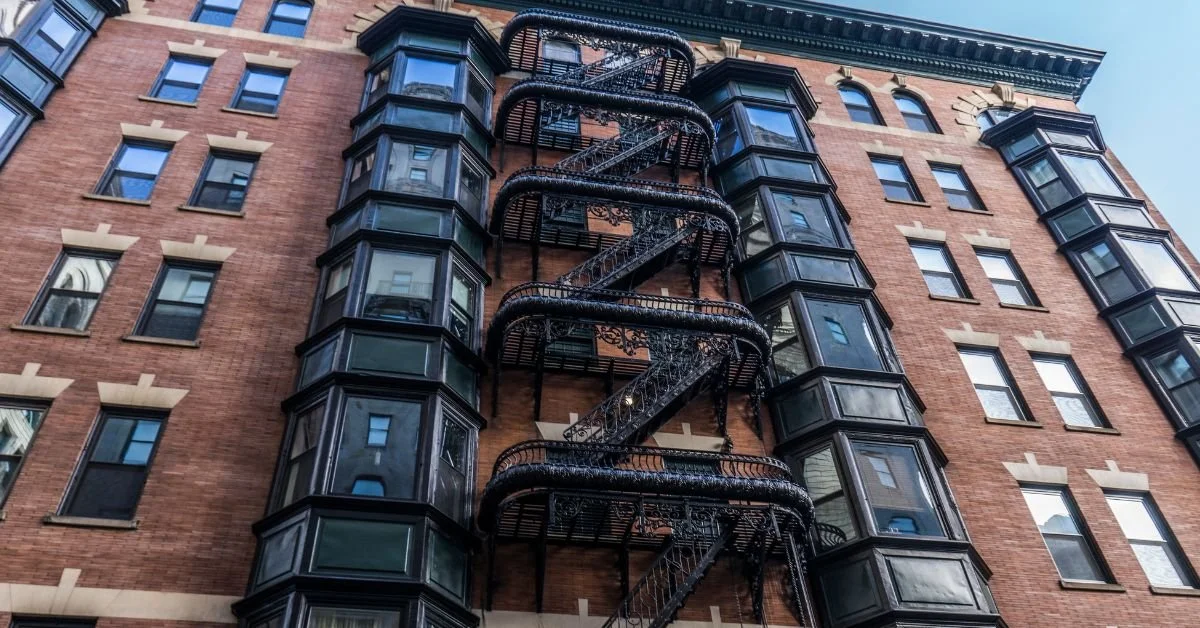
Historic buildings beautifully showcase decorative cornices, arched windows, masonry details, and charming ornamental trims. A misaligned fire escape can distract from these lovely features, but a thoughtful layout can help preserve the building’s original character.
Whenever possible, consider placing platforms along secondary elevations. Align stair runs with window spacing to maintain a harmonious look. Be sure to follow the existing vertical and horizontal lines within the façade to maintain visual harmony.
Design should accomplish two goals:
Provide safe, accessible egress
Maintain architectural harmony
When you respect the structure’s proportions, the fire escape integrates naturally into the exterior.
Address Pre-Existing Non-Conforming Conditions
Many historic buildings have unique features that don’t quite match modern standards. When inspecting these structures, officials mainly check their structural safety and IFC certification, rather than strict adherence to current measurement rules. It’s important to remember this difference during design and review processes to avoid assuming everything has been built to today’s norms.
An experienced contractor knows how to work safely with older structures in compliance with regulations. Taking the time to evaluate thoroughly helps protect the property and prevent unnecessary changes that could compromise its integrity.
Select Durable Materials and Professional Welding
Long-term performance depends on material strength and connection quality. Welded steel systems provide consistent structural reliability and stability. Welded connections create rigid assemblies that resist movement and fatigue.
Professional crews prioritize:
Structural-grade steel
Welded connections
Engineered anchoring plates
Exterior protective coatings
Skilled AWS-certified welders carefully make precise connections, ensuring everything meets inspection standards. High-quality welding helps keep structures properly aligned and guarantees long-lasting strength and durability.
Plan for Safe Access and Egress Flow
A new fire escape should provide a clear, accessible route from interior openings to the ground outside. It's important to consider how occupants will reach the system quickly and safely during an emergency. When designing the layout, attention to window alignment, landing space, and stair placement can really help improve the flow of evacuation.
Supporting efficient movement involves avoiding tight turns, blocked platforms, or tricky spots where descent could be difficult. A well-designed layout improves safety and simplifies inspections. Thoughtfully planned configurations increase daily reliability and ensure the system is prepared for emergencies, providing peace of mind for all.
Manage Installation With Care
Installing a fire escape on historic masonry requires careful attention. Contractors take extra steps to safeguard decorative features, bricks, and architectural details while anchoring and welding. Skilled teams use gentle drilling techniques and plan their steps thoughtfully to keep the building looking beautiful and intact.
Temporary supports help stabilize the parts during work, ensuring everything stays secure. Paying close attention during installation helps protect both the safety of everyone involved and the historic charm of the building.
Budget With Long-Term Performance in Mind
Project cost depends on building height, structural condition, access limitations, and fabrication complexity. Historic buildings may require custom brackets or modified stair layouts, which can increase labor time.
Effective planning can lead to long-term savings. Proper structural attachment and professional welding significantly decrease future repair needs. Acquiring scheduled five-year IFC certifications ensures compliance and simplifies maintenance planning. When evaluating costs, prioritize durability, ease of inspection, and overall structural strength.
Protect Safety Without Compromising History
Property owners who add a fire escape to a historic or landmark building must balance preservation standards with life-safety requirements. Structural evaluation, coordinated approvals, architectural sensitivity, and expert welding all shape the outcome. Precision at every stage supports certification and long-term performance.
Maximum Fire Escapes brings decades of experience to historic structures across the country. Our team manages planning, approvals, and fire escape fabrication with structural strength and inspection compliance at the forefront. Contact Maximum Fire Escapes today and speak directly with our specialists about your historic property. We handle your project from start to finish and deliver work that stands up to inspection.