
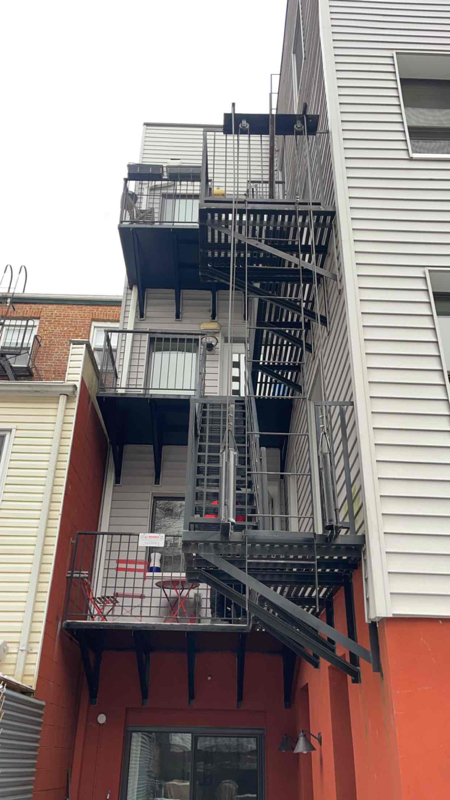
A fire escape depends on secure connections between its stairs, platforms, and supporting framework. Some structures use mechanical fasteners to hold these components together, while others rely on welded joints. Each method has different construction requirements that influence how contractors assemble and repair the structure.
For building owners comparing bolt-on vs. welded fire escape construction, these differences matter most when an aging system needs attention. Understanding how each method works can help you make informed decisions about repairs and long-term structural reliability.
How Bolt-On Fire Escape Construction Works
Bolt-on construction uses mechanical fasteners to connect individual steel components. Contractors align adjoining sections and secure them with bolts through openings that follow the structural design.
This method commonly appears in prefabricated steel assemblies, where manufacturers prepare individual sections before installation. Workers can assemble the components on-site without welding every connection.
The fastening points require careful consideration because the hardware and surrounding steel must work together to transfer weight. Over time, corrosion can develop in and around bolt holes or between overlapping plates, particularly where moisture collects.
Although mechanical connections have established applications in steel construction, their suitability depends on the fire escape's original design and current condition.
How Welded Fire Escape Construction Works
Welding creates a more permanent connection by fusing adjoining metal surfaces. The finished joint transfers structural forces between steel components without relying on separate mechanical fasteners.
Contractors use welding throughout fire escape construction, including areas where stair framing meets platforms and where supporting members connect to adjoining sections.
Welding also lets crews restore damaged connections without dismantling sound portions of the structure. However, the process requires suitable steel and careful preparation before work begins.
Where Welding Supports Structural Repairs
Consider a stair stringer with a cracked connection near a landing. A qualified welder may repair the joint after evaluating the damage and confirming that the surrounding metal remains structurally sound.
If corrosion has weakened the adjoining steel, the repair may require removing the damaged portion and welding in a replacement section.
The distinction matters because welding can restore a connection, but it can't compensate for metal that has already lost substantial structural strength.
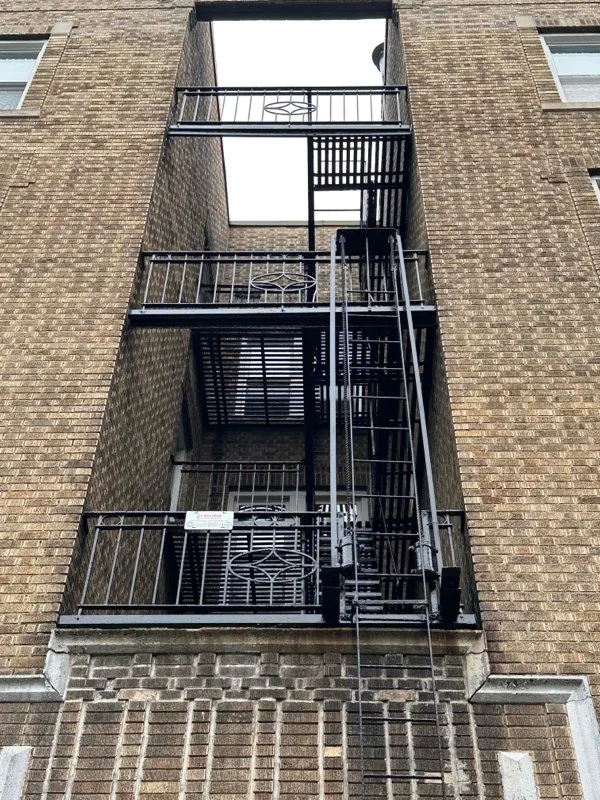
Comparing Strength and Structural Performance
Both construction methods can provide reliable support when contractors follow an appropriate structural design. Their differences involve how each joint transfers forces through the connected steel members.
Bolted connections carry forces through the fasteners and adjoining surfaces. Depending on the connection design, they may permit limited movement or provide rigid support.
Welded joints transfer forces through the fused metal, creating a continuous connection between components. This rigidity can benefit fire escape framing where contractors need permanent structural support.
Neither method automatically performs better under every condition. Connection strength depends on proper construction and the forces the joint must withstand. For property owners, the more useful question concerns which method suits the specific structure and the work it requires.
How Weather Exposure Affects Each Connection
Outdoor conditions influence the long-term performance of fire escape connections. Rainwater can reach exposed steel, while seasonal temperature changes cause metal components to expand and contract.
Bolted assemblies often contain narrow spaces between connecting plates. Moisture can remain in these areas and contribute to corrosion around fastening points.
Welded connections eliminate separate fasteners at the joint, although they remain vulnerable to rust when protective paint deteriorates. Corrosion may develop along weld seams or spread into nearby steel surfaces.
These differences affect how inspectors examine each assembly. Bolted joints require attention around the hardware and connecting plates, while welded sections need close examination for cracking or deterioration along the seam.
Protective painting and timely repairs help limit weather-related damage, regardless of the original construction method.
Why Welding Often Works Well for Existing Fire Escapes
Many older fire escapes have structural connections that require attention after decades of outdoor exposure. Welding lets qualified contractors repair damaged joints and add replacement steel without rebuilding unaffected sections.
The repair process depends on the damage's location and extent.
Common welding applications include:
Stair connections: Repairing damaged joints where stair framing meets a landing or supporting member.
Platform framing: Connecting replacement steel where corrosion has weakened existing supports.
Railing attachments: Restoring secure connections where railings have separated from adjoining components.
Structural reinforcement: Addressing weakened connections according to the appropriate repair design.
Before starting work, contractors evaluate whether the existing metal can support the proposed repairs. They also consider access around the damaged area because restricted working space may influence how crews complete the welding.
These assessments help establish a repair scope that addresses the actual damage without unnecessary reconstruction.
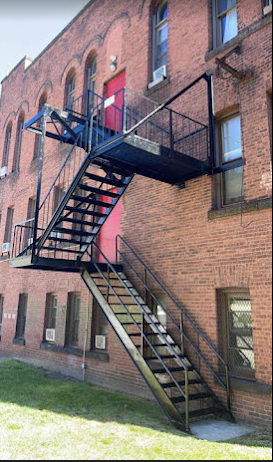
What Changes When Working With Older Fire Escapes?
Older fire escapes may contain a combination of original mechanical connections and welded repairs from previous decades. Their construction history can affect how contractors plan future work.
For example, an original bolted assembly may have adjoining steel plates that have deteriorated, even if the fasteners remain in place. Repairing that area requires attention to the damaged material rather than focusing exclusively on the bolts.
Previous welding work also deserves examination. Contractors need to determine whether older repairs remain sound and how they connect to the surrounding framing.
When deterioration affects substantial portions of the structure, fire escape replacement may make more sense than repairing individual connections.
An inspection helps establish which components remain serviceable and where reconstruction may provide a more dependable long-term solution.
How Installation Conditions Influence Construction
A building's physical layout can affect how contractors assemble or repair its fire escape. Existing stair sections, exterior walls, and platform supports may restrict access to certain connection points.
Bolt-on construction requires enough working space to align steel components and secure their fasteners. Contractors must also account for the placement of connection openings within the structural design.
Welding involves different considerations. Crews need access to the joint and must manage heat exposure around nearby building materials.
On an existing fire escape, contractors may also need to support adjoining components while removing damaged steel. Planning these steps helps maintain stability throughout the repair process.
Understanding the installation conditions allows contractors to select suitable construction procedures before work begins.
Which Fire Escape Construction/Repair Method Is Better?
The choice between bolt-on and welded fire escape construction depends on the application and the structure's condition.
Bolted connections can provide dependable support in assemblies specifically designed for mechanical fastening. They allow contractors to join prefabricated components using prepared connection points.
Welding often offers greater flexibility for repairing existing fire escapes because qualified welders can restore damaged joints and connect new steel where necessary. It also provides permanent connections that suit many structural reinforcement applications.
For older fire escapes, contractors must consider how the proposed work interacts with the existing framing. A method that works well during new construction may not suit a structure with extensive deterioration or previous modifications.
A professional evaluation helps determine which repairs will address the damage while preserving the integrity of the remaining assembly.
Get Professional Guidance for Your Fire Escape
Your fire escape's condition should guide construction and repair decisions. Addressing damaged connections early can help prevent deterioration from affecting larger sections of the structure.
At Maximum Fire Escapes, our AWS-certified welders specialize in structural welding repairs and fire escape construction. Contact us to discuss your property's condition and get professional guidance on the work needed to restore safe, dependable structural connections.